
Engineering guide
How to hand monitoring data to your software
Agree the record before the connection.
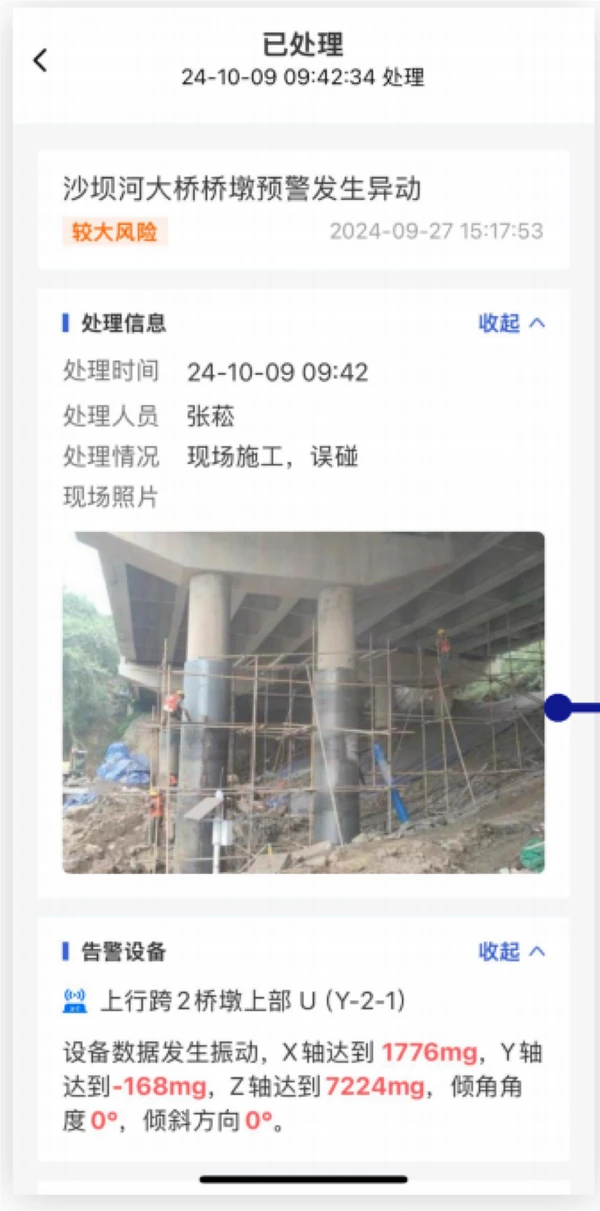
Fullstack Intelligence offers project-scoped managed, connected and raw-data routes for X-series monitoring. Agree the required record, receiving system, processing and responsibilities before integration. A representative X-7 Shaba River record contains displayed readings and a staff finding; it is evidence of a review workflow, not a published API schema or a guaranteed X-8 export format.
Sources: Recorded platform views and data routes, Shaba River Bridge saved mobile record.
Which data route fits the team?
Use our platform
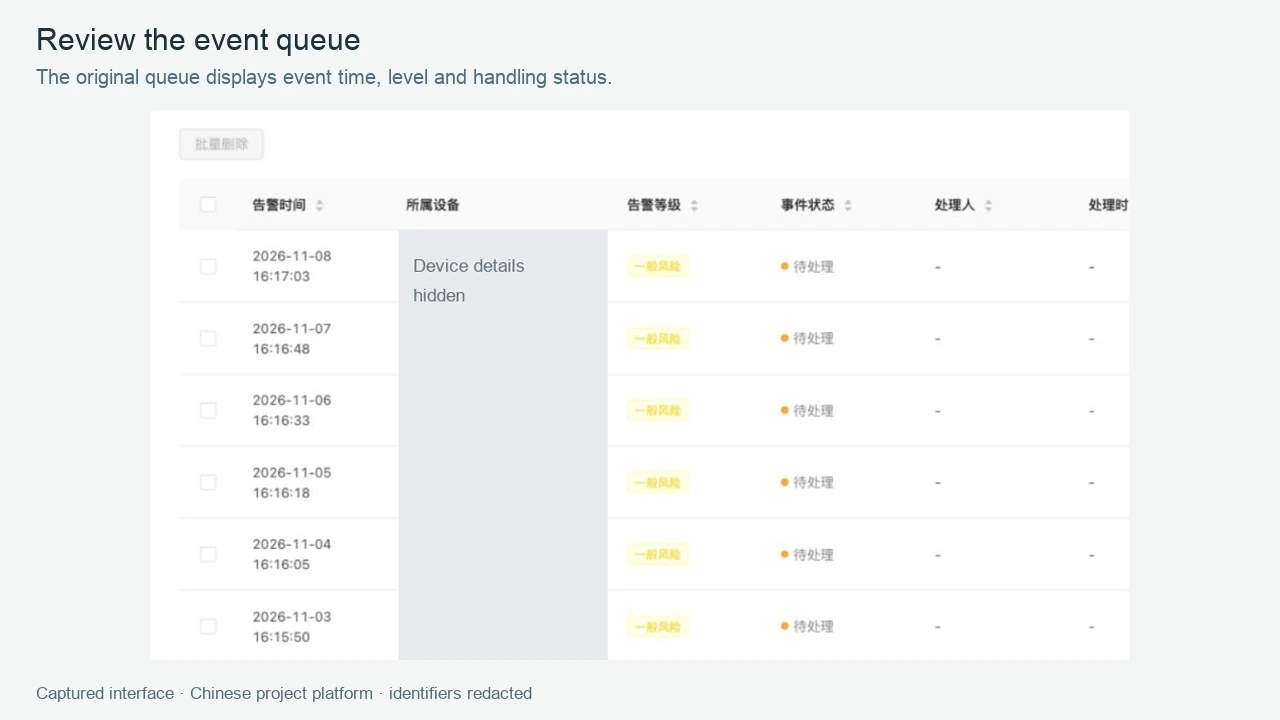
Review the agreed device views and events in the monitoring platform. Confirm language, user access, hosting, notifications and who records the finding.
Connect your software
Deliver agreed readings or processed events to the receiving system. Define the interface, field mapping, security and receiving-side work for the project.
Work with raw data
Define the available measurements, processing and delivery format with your technical team. Confirm what “raw” includes for the proposed device and configuration.
The platform and data page lets you compare these routes and carry your choice into an enquiry. Terms, fees and service scope are agreed in the project quote.
What can we inspect before agreeing an interface?
Request a representative record for the model, hardware and software configuration being proposed. Use the Shaba River X-7 source record to discuss the difference between measured fields, a site photograph and a staff handling entry. The receiving system may need all three, or only an agreed subset.
What should be agreed for data handover?
| Agree | Write down |
|---|---|
| Record identity | Model, device identifier, asset point and configuration version. |
| Measurement and time | Field names, units, coordinate/orientation convention, timestamp and time zone. |
| Event detail | Trigger rule, pre/post window, sample spacing and missing-data flags. |
| Processing and access | Filtering, raw/processed definitions, authentication, ownership and hosting. |
| Connection loss | Buffering, retry, backfill, duplicate handling and retention. |
| Acceptance and support | Sample record, receiving-side test, named responsibilities and support scope. |
This download is a planning template. It does not assert that each field or function is available as standard. Agree availability and acceptance against the actual proposed configuration.
Is a standard API or format published here?
This site describes data-access routes and shows real records. It does not publish a standard API contract. Request the protocol, authentication method, available fields, output rate, processing rules and a sample response for your project. Confirm licensing, interface work and receiving-system costs in the quote.
For a fixed ancillary asset at a port, bridge or industrial site, first name the event and the person who reviews it. Then define the smallest record that makes the handover useful. Define an evaluation scope.
Sources and scope
- Recorded platform views and data routesCaptured from the working China platform on 9 November 2026. Identifiers are omitted; views do not define an export schema.
- Shaba River Bridge saved mobile recordX-7 project material, China. The guide transcribes the displayed values; it does not reconstruct a time series.
- Technical evaluation and delivery scopeManufacturer evaluation checklist. Site, communications, measurement and delivery responsibilities are agreed for the project.
Prepared from manufacturer materials and the project records named above. Engineering acceptance remains specific to the proposed installation.